Queue Management System in Saudi Arabia: 2026 Retail Guide
Long checkout lines are one of the fastest ways to lose a customer in today’s retail market, and that is exactly why a queue management system in Saudi Arabia has moved from “nice to have” to a baseline operational requirement for serious retailers. As footfall rebounds in Riyadh, Jeddah, and Dammam malls through 2026, stores that still rely on a single cashier queue and a handwritten ticket book are visibly losing customers to competitors next door.
This guide walks through why wait times are climbing, what a modern queueing setup actually includes, how barcode scanning ties directly into checkout speed, and how to roll out new in-store technology without disrupting daily operations.
Why Customer Wait Times Are a Growing Problem for Saudi Retailers
Saudi Arabia’s retail sector has expanded rapidly alongside the goals set out in the Kingdom’s Vision 2030 program, with new malls, hypermarkets, and government service counters opening across the Kingdom every year. More footfall is good news for revenue, but it also means legacy queueing methods — a single line, a paper number, or an overworked greeter — simply cannot keep pace.
Customers today compare their in-store wait against the instant gratification of online shopping. A five-minute line at a pharmacy counter or a telecom branch now feels unacceptably long, and research from consumer behaviour studies consistently shows that perceived wait time, not actual wait time, drives satisfaction scores down fastest.
What a Queue Management System in Saudi Arabia Actually Does
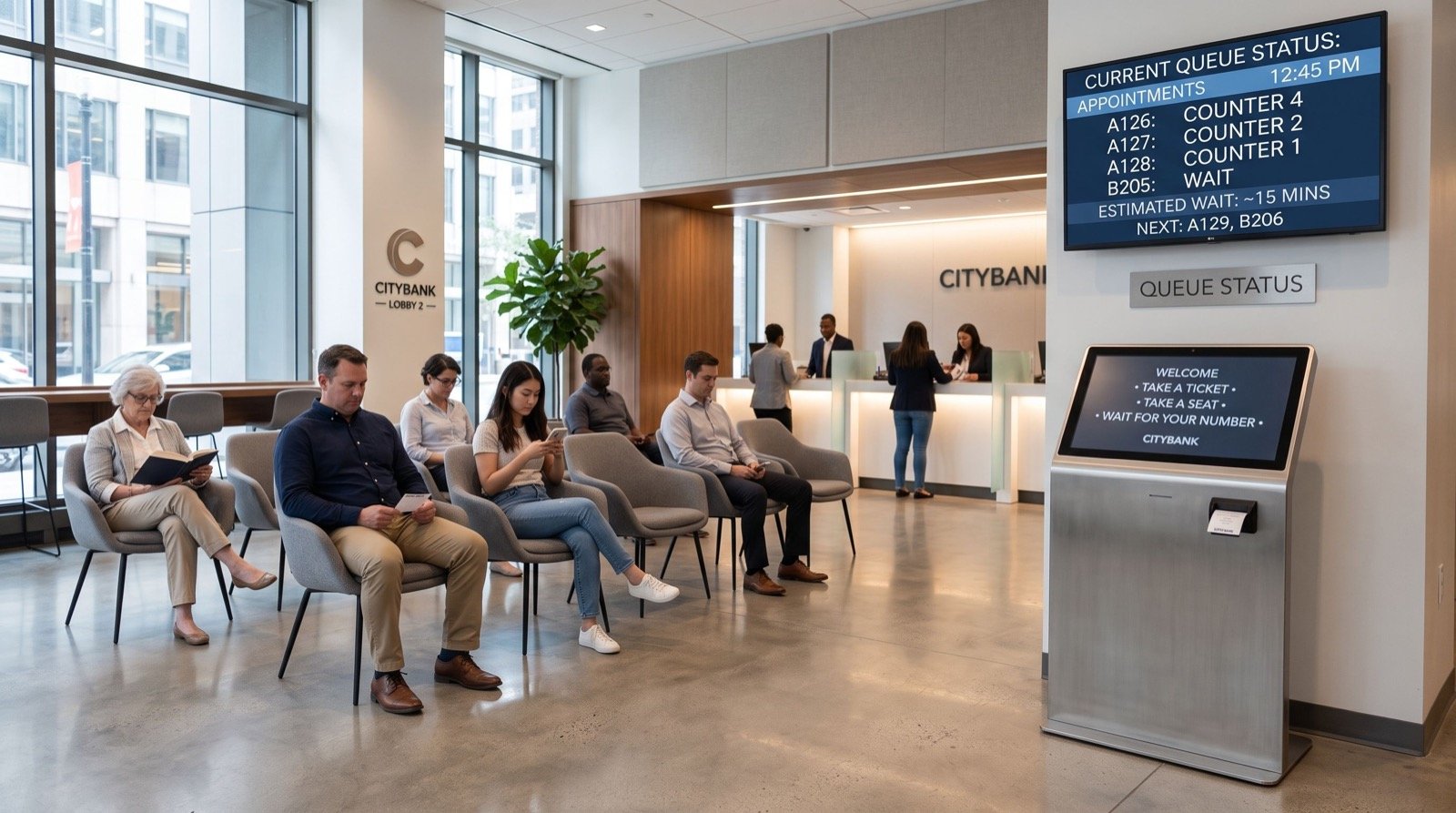
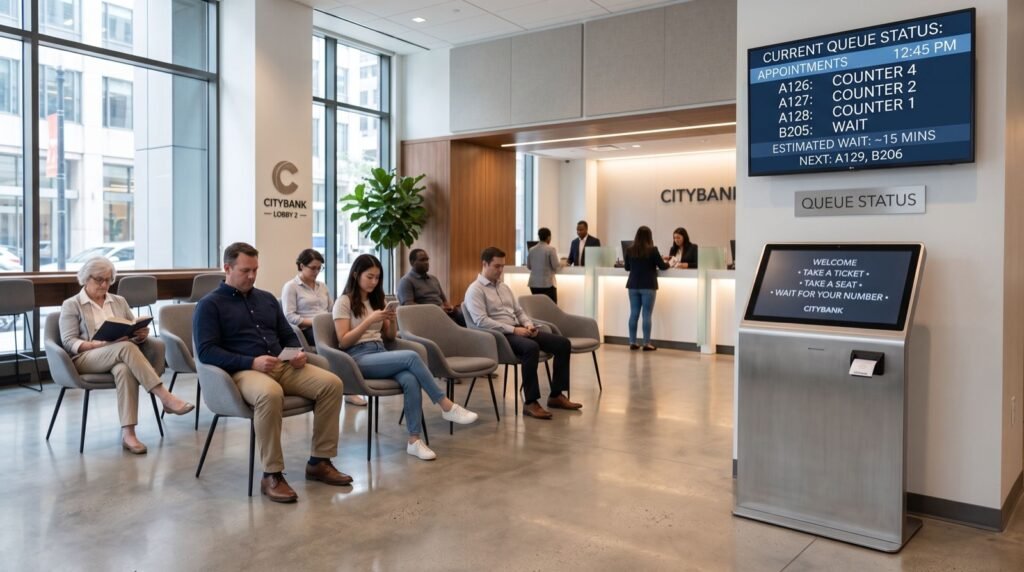
A properly deployed queue management system in saudi arabia replaces guesswork with structured, ticket-based flow control. Customers pull a digital ticket, see an estimated wait time on a screen, and are called to the correct counter automatically — freeing staff to focus on service instead of crowd control.
Core Components of a Modern Setup
- A ticket kiosk or mobile check-in point at the entrance
- Digital display screens showing live queue status and estimated wait
- Counter-side call buttons or software that summon the next customer
- Backend analytics dashboard tracking average wait, service time, and peak hours
- Optional SMS or app notifications so customers can wait off-site
These pieces work together so branch managers can see exactly where bottlenecks form, then reassign staff or open an extra counter before the line visibly grows.
Barcode Scanning: The Other Half of a Fast Checkout Line
Queueing software controls who gets served next, but the speed of that service still depends on how quickly a cashier or counter agent can process the transaction. This is where hardware like the Honeywell Orbit HF680 earns its place on the counter. A hands-free presentation scanner lets staff slide items past the sensor rather than hunting for a trigger, shaving real seconds off every single transaction.
Multiply those saved seconds across hundreds of daily transactions and the effect on an already-long queue is substantial. Fast, reliable scanning combined with structured queue routing is what actually moves a line, not either technology alone.
Manual Queueing vs. Digital Queue Management in 2026
| Factor | Manual Line / Paper Ticket | Digital Queue Management |
|---|---|---|
| Wait-time visibility | None — customers guess | Live estimate on screen or app |
| Staff allocation | Reactive, after lines form | Data-driven, before lines form |
| Peak-hour handling | Frequent overcrowding | Automated counter balancing |
| Reporting | Manual, inconsistent | Automated daily/weekly analytics |
| Customer experience | Frustration, abandonment | Transparent, predictable |
Rolling Out New Technology Across Multiple Branches
Retail chains expanding into new cities face a logistics challenge beyond the software itself: moving fixtures, setting up new counters, and getting a fresh branch operational without weeks of downtime. Many operators underestimate this part of the project and end up with half-installed systems sitting in storage.
If your expansion plan includes opening or relocating a head office alongside new branches, it pays to work with dependable specialists who understand how to sequence an office move so IT equipment, queue kiosks, and counter hardware all arrive and get installed in the right order. A rushed relocation is one of the most common reasons a queue system launch slips by months.
How Do You Choose the Right Queue Management Partner?
Not every vendor who sells a ticket kiosk understands retail operations. Before signing a contract, ask for a live reference site, confirm Arabic and English language support on the display screens, and check that the hardware — scanners, printers, and screens — is sourced from established manufacturers with regional support, rather than generic unbranded imports that fail within a year.
Questions to Ask Before Signing Any Contract
- Can the vendor show a live branch running the exact configuration being proposed, not just a demo video?
- What happens if a screen or scanner fails on a Friday during peak hours — is there a same-week replacement policy?
- Is pricing per-counter, per-branch, or a flat annual licence, and does that model match your actual branch count?
- Does the analytics dashboard export data in a format your finance and operations teams can actually use?
A vendor who hesitates on any of these questions is usually signalling a support gap that will surface the first time something goes wrong in a live branch, not during the sales demo.
Common Mistakes Retailers Make During Rollout
The most frequent mistake is launching new queueing technology at every branch simultaneously. If the configuration needs adjusting — and it almost always does — fixing one pilot branch is far easier than untangling problems across ten locations at once.
A second common mistake is skipping staff training on the “why,” not just the “how.” Counter staff who understand that the system is designed to reduce their own workload during peak hours tend to use it properly, while staff who see it as management surveillance often quietly revert to old habits within weeks.
Frequently Asked Questions
How does a queue management system reduce wait times?
It does not make transactions instantly faster; instead it distributes customers evenly across available counters, gives staff advance notice of incoming volume, and gives customers a transparent estimate so perceived wait time drops even when actual wait time is similar.
Is a queue management system in Saudi Arabia expensive to install?
Costs vary by branch size and feature set, but most mid-size retail or service branches can deploy a kiosk, two display screens, and basic analytics for a fraction of what one month of lost customers due to poor service would cost.
Do I need new barcode scanners if I already have a queue system?
Not necessarily, but pairing structured queueing with a fast, reliable scanner like the Honeywell Orbit HF680 compounds the benefit — the line moves faster at the counter, not just while waiting for it.
How long does installation typically take per branch?
A single branch rollout usually takes one to three days for hardware setup and staff training, assuming cabling and network infrastructure are already in place.
Final Thoughts
Saudi retail and service businesses that invest in a proper queue management system in Saudi Arabia in 2026 are not just buying software — they are buying back customer patience. Combined with fast counter hardware and a well-sequenced rollout plan, the payoff shows up in shorter lines, calmer staff, and measurably better customer satisfaction scores within the first quarter of use.